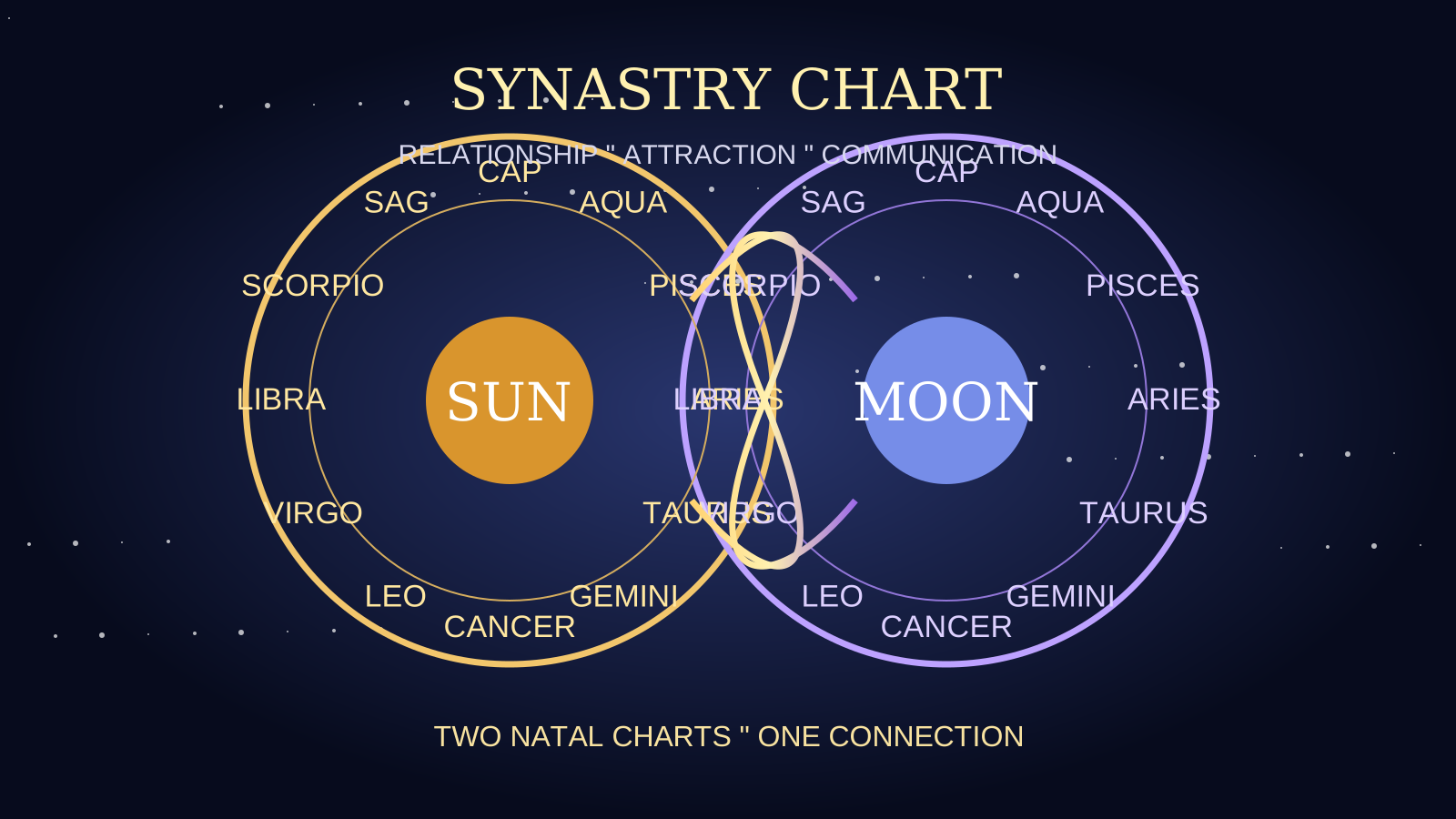
Synastry is one of the most popular ways astrologers compare two birth charts. Instead of asking only whether two Sun signs “match,” a synastry chart looks at how the planets, signs, houses and aspects in one person’s chart interact with those in another person’s chart.
Interest in relationship astrology remains substantial: current U.S. keyword estimates put “synastry chart” at about 18,100 monthly searches, while “zodiac compatibility” is also a major search topic.
What Is a Synastry Chart?
A synastry chart is a comparison of two natal charts. Astrologers place one person’s planetary positions against another person’s chart and interpret the relationships between them. The goal is to explore patterns in attraction, communication, emotional connection, tension, values and partnership.
Synastry is different from a simple zodiac compatibility chart. A Sun-sign match compares only one part of each person’s chart. Synastry can consider the Moon, Mercury, Venus, Mars, Jupiter, Saturn, the outer planets, the Ascendant, house overlays and major aspects.
Why Synastry Goes Beyond Sun-Sign Compatibility
Two people can have supposedly “different” Sun signs and still have many supportive chart connections. Likewise, two people with supposedly compatible Sun signs can have challenging communication or emotional patterns.
Astrology therefore treats compatibility as a combination of factors rather than a single score. A useful synastry reading asks how two people connect, where they naturally understand one another, and where their styles may require more awareness.
The Most Important Planets in Synastry
Sun: Identity and Vitality
In traditional astrological interpretation, the Sun represents identity, vitality and self-expression. Strong Sun connections can be interpreted as recognition, confidence and a feeling that the other person understands or energizes your sense of self.
Moon: Emotional Compatibility
The Moon is associated with emotions, instinct, comfort and private needs. Moon-to-Moon or Moon-to-personal-planet contacts are often examined when astrologers discuss emotional familiarity and everyday closeness.
Mercury: Communication
Mercury is traditionally associated with thinking, communication and information exchange. Mercury contacts can be useful when examining how two people explain themselves, solve problems, joke, debate and misunderstand one another.
Venus: Attraction and Values
Venus represents affection, attraction, aesthetics and values in astrology. Venus contacts are frequently emphasized in romantic synastry because they can symbolize appreciation, warmth and shared tastes.
Mars: Desire and Action
Mars is associated with drive, initiative, desire and assertiveness. Mars connections can be interpreted as chemistry and motivation, but also as areas where two people may trigger each other’s impatience or competitiveness.
Jupiter: Growth and Encouragement
Jupiter traditionally represents expansion, optimism, learning and generosity. Jupiter connections may be interpreted as encouragement, humor, shared exploration or a sense that the relationship opens new possibilities.
Saturn: Commitment and Responsibility
Saturn is associated with structure, boundaries, responsibility and endurance. Saturn contacts can feel serious in an astrological interpretation and may highlight commitments, obligations or lessons about patience and limits.
Synastry Aspects to Look For
Conjunctions
A conjunction occurs when planets are close together by degree. Astrologers often treat conjunctions as concentrated interactions. The meaning depends strongly on which planets are involved.
Trines and Sextiles
Trines and sextiles are traditionally considered harmonious aspects. In relationship astrology, they may be interpreted as areas where two people naturally support or understand each other’s style.
Squares
Squares represent tension between planetary functions. They are not automatically “bad.” In synastry, a square may describe friction that encourages growth, but it can also point to recurring disagreements if both people handle the tension poorly.
Oppositions
Oppositions place two planets across the zodiac from one another. They can create a strong sense of attraction or polarity while also highlighting differences that need balance.
Venus and Mars in Relationship Synastry
Venus-Mars connections receive considerable attention because Venus is traditionally linked with affection and attraction while Mars is associated with desire and action. Supportive contacts may be interpreted as chemistry, while harder contacts can symbolize a push-pull dynamic.
However, Venus and Mars alone do not determine whether a relationship works. Communication, emotional compatibility, shared values and real-world behavior remain important outside an astrological framework.
Moon Synastry and Emotional Connection
Moon contacts can be especially interesting for people trying to understand why a relationship feels emotionally familiar. Astrologers may compare Moon placements with the other person’s Sun, Moon, Venus, Mars and Ascendant.
For example, a person’s Moon contacting another person’s personal planet may be interpreted as creating emotional responsiveness. The exact interpretation depends on the signs, houses, aspect type and overall chart pattern.
House Overlays in Synastry
House overlays ask where one person’s planets fall in the other person’s twelve houses. This adds another layer to compatibility analysis.
- 1st house: identity, presence and first impressions.
- 2nd house: values, possessions and security.
- 3rd house: communication, learning and everyday interaction.
- 4th house: home, family and emotional roots.
- 5th house: romance, creativity, pleasure and play.
- 6th house: routines, work and practical support.
- 7th house: partnership and one-to-one relationships.
- 8th house: intimacy, shared resources and transformation.
- 9th house: beliefs, travel, education and worldview.
- 10th house: career, reputation and public direction.
- 11th house: friendship, community and future goals.
- 12th house: privacy, reflection and unconscious themes.
How to Read a Synastry Chart Step by Step
1. Start With the Big Three
Compare the Sun, Moon and Ascendant first. This provides a simple foundation before moving into detailed planetary aspects.
2. Check Venus, Mars and Mercury
Next examine Venus for affection and values, Mars for drive and attraction, and Mercury for communication. These personal planets often provide practical relationship themes.
3. Look for Repeated Patterns
Do not build an interpretation around one aspect. If several contacts point toward communication, emotional sensitivity or independence, the repeated pattern deserves more attention.
4. Add Jupiter and Saturn
Jupiter can add themes of growth and encouragement, while Saturn can highlight responsibility, structure and boundaries.
5. Consider House Overlays
Finally, examine which houses each person’s planets activate. This helps translate planetary connections into areas of life where the relationship may feel especially noticeable.
What Synastry Can and Cannot Tell You
Synastry can be used within astrology as a symbolic framework for reflection and conversation. It can help readers explore themes such as communication, attraction, emotional needs and boundaries.
It should not be treated as a scientific test that proves whether two people are destined to stay together. Astrology is an interpretive belief system, and relationship outcomes depend on communication, consent, circumstances, behavior and many factors outside a birth chart.
Synastry vs. a Composite Chart
Synastry compares two individual charts. A composite chart is created by combining chart information into a single relationship chart, which astrologers interpret as representing the relationship itself.
They answer different questions: synastry focuses on how two people affect one another, while a composite chart focuses on the symbolic identity of the relationship as a unit.
Common Synastry Mistakes
- Judging a relationship from Sun signs alone.
- Calling one difficult aspect a deal-breaker.
- Ignoring communication and emotional patterns.
- Treating astrology as a guaranteed prediction.
- Looking for a perfect “score” instead of examining the complete chart.
Frequently Asked Questions
What is the most important aspect in synastry?
There is no single universally most important aspect. Astrologers usually consider the planets involved, the aspect type, its closeness and the wider pattern of the two charts.
Is synastry the same as zodiac compatibility?
Not exactly. Zodiac compatibility often compares Sun signs, while synastry can compare many planetary positions, aspects and house placements.
Can synastry predict marriage?
Astrologers may use synastry to discuss partnership themes, but it cannot scientifically predict whether two people will marry or whether a marriage will succeed.
Do difficult synastry aspects mean a relationship will fail?
No. Within astrology, challenging aspects can be interpreted as areas requiring awareness or adjustment. They do not provide a guaranteed relationship outcome.
Explore More Astrology Guides
For the foundation of reading individual charts, see our birth chart guide. You can also explore our Zodiac Compatibility Calculator, our guide to Mercury in Scorpio, and our October 2026 monthly horoscope.
For general background, see Wikipedia’s overview of synastry.